
Description
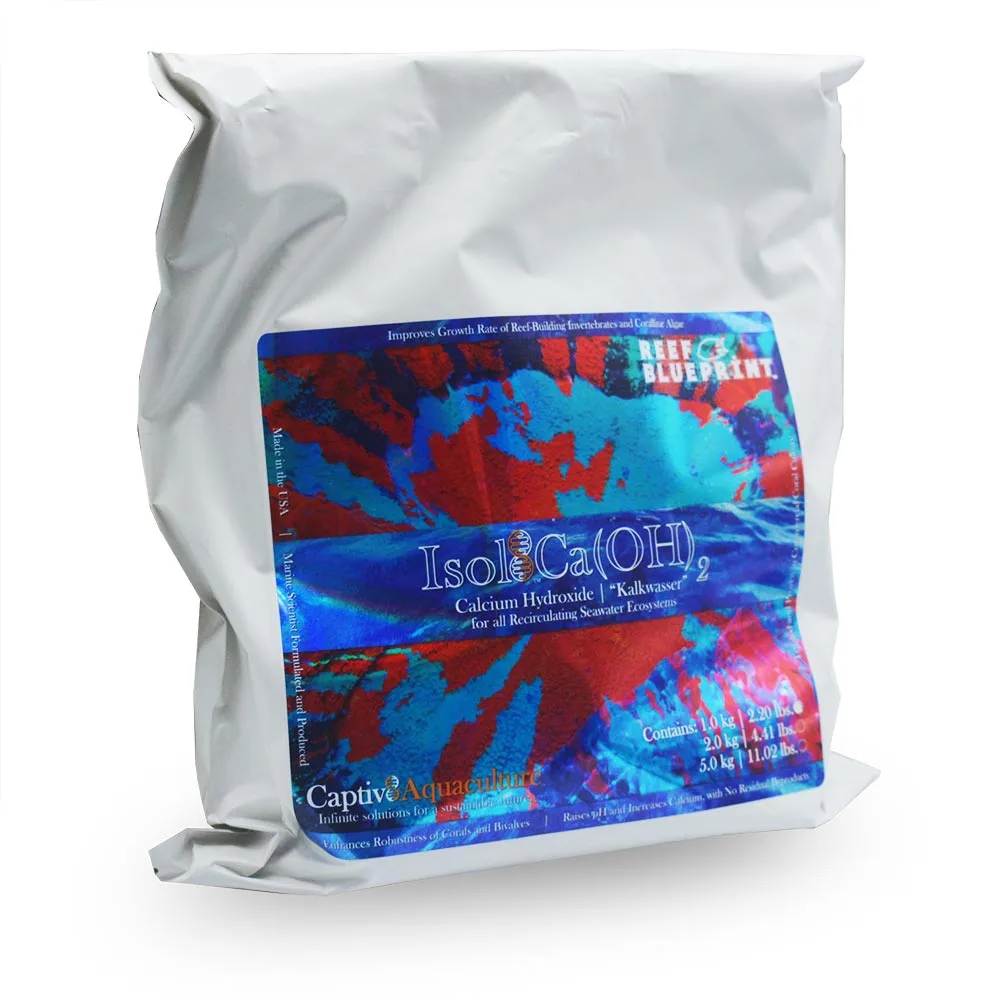
Calcium Hydroxide | “Kalkwasser” Characteristics Provides calcium. Increases pH. Kalkwasser application is an integral part of an effective pH-management and coral growth regimen in dedicated coral culture systems. Basic Application See ‘Application’, below. Application Review Disclaimer at the bottom of this page prior to use. Keep out of reach of children and unauthorized persons. Avoid contact with skin, eyes, and mucous membranes. Store in a cool, dry location away from sunlight. Do not inhale dust. The following discussion and recommendations are made expressly for recirculating systems. Laboratory application may proceed as required by study objectives. Review Disclaimer at bottom of page prior to using this or other Captiv8 Aquaculture product(s). Your system’s water chemistry and safety is your responsibility. Calcium hydroxide addition to any solution, including system water, will increase pH. Excessive addition may result in system pH increasing beyond the value tolerated by cohort members. Review the entire contents of this page prior to using Isol8 Ca(OH)2. Address any questions by contacting us, directly, prior to application. While there are some preparatory steps required when using calcium hydroxide in systems housing cohorts comprised of reef building invertebrates, users are rewarded with greater pH stability (assuming that the dosing procedure below is adhered to) and, generally, greater rates of calcification than in systems not employing this calcium source. Users often find that the requirement to boost alkalinity is decreased in systems dosed with calcium hydroxide solution as a means of pH management. Mixing and Dosing Procedure: Calcium hydroxide and its solutions are skin and membrane irritants. Do not handle these substances without proper personal protective equipment. The pH of saturated calcium hydroxide solution is ~12.4 for T=25°C / 77°F. Obtain a clean mixing vessel, such as a pail or jerrican, that can be covered or closed with a lid, with a capacity of 2 – 10 gallons. Recommended is to prepare enough solution to last up to 48 hours worth of dosing; required solution volume is system dependent and is a factor of pH change per unit time, so initially it is recommended to prepare 1 gallon of solution and then adjust this volume as system requirements dictate. Isol8 Ca(OH)2 must be thoroughly mixed (using a long-handled plastic spoon or mixing paddle) into purified water at the rate of 6.50 g / 1 gallon (assuming T=25°C / 77°F) and allowed to settle for 15 minutes, or until the solution becomes clear. Place a lid on the mixing vessel to mitigate the interaction of the air space immediately above the solution with atmospheric CO2. Resist the temptation to prepare more solution than is required for 48 hours, as CO2 interaction with the solution will result in solution weakening. Draw the calcium hydroxide solution from the vessel via dosing pump (e.g. peristaltic pump), the operation of which is regulated entirely by a calibrated pH controller (not by a timer). As previously noted, the pH of saturated calcium hydroxide solution is ~12.4 at a temperature of 25°C / 77°F; resultantly, this solution must be dosed via pH controlled application, as dosing with a timer can result in system pH exceeding a maximum allowable value (in recirculating marine ecosystems, we recommend a maximum pH value of 8.40). Initially, locate the controller’s pH probe in close proximity to the solution discharge point, enabling the controller to rapidly react to the change in system pH as the solution is dosed. With time, the distance between the probe and the discharge point can be modified to enable the solution to enter the system without driving the pH value above the allowable maximum. The solution should be dripped into the system in a location where it will be dispersed throughout the system via steady water flow, such as near a return pump intake. The rate of solution addition should not cause the system pH to exceed the maximum allowable value by more than 0.02. Perform regular calibration of the pH controller to maintain maximum accuracy. Notes: Do not drip calcium hydroxide solution in close proximity to sessile invertebrates or developing finfish embryos. Monitor cohort for signs of distress when increasing average system alkalinity and pH, and decrease or halt rate of dosing if distress is noticed. Do not increase average system pH value by more than 0.10 per 12h. Aside from emergencies (e.g. excessive nutrient content in an active system, greatly depressed or excessive salinity, etc.), gradual changes in water composition are generally tolerated better by aquatic organisms than are rapid changes. If using the recommended ratio of 6.50 g calcium hydroxide to 1 gallon purified water, then the solution should become clear w…