
Description
Plant Profile
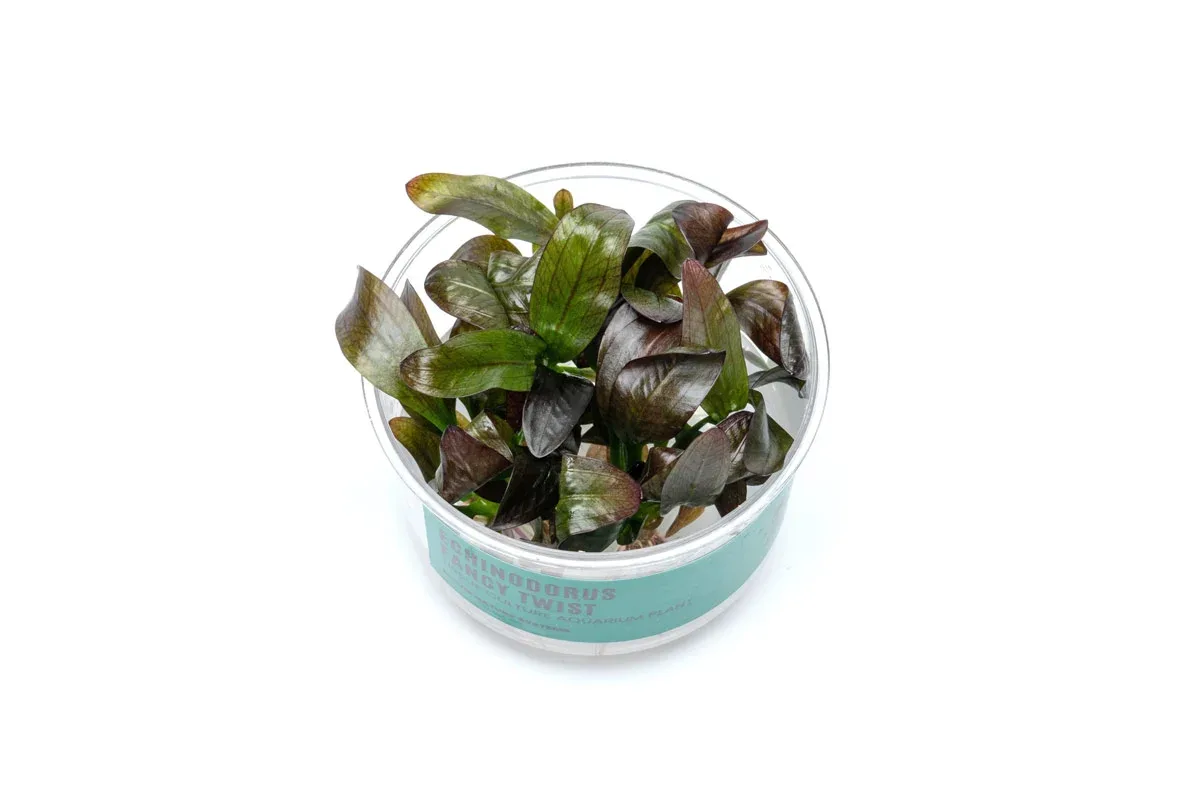
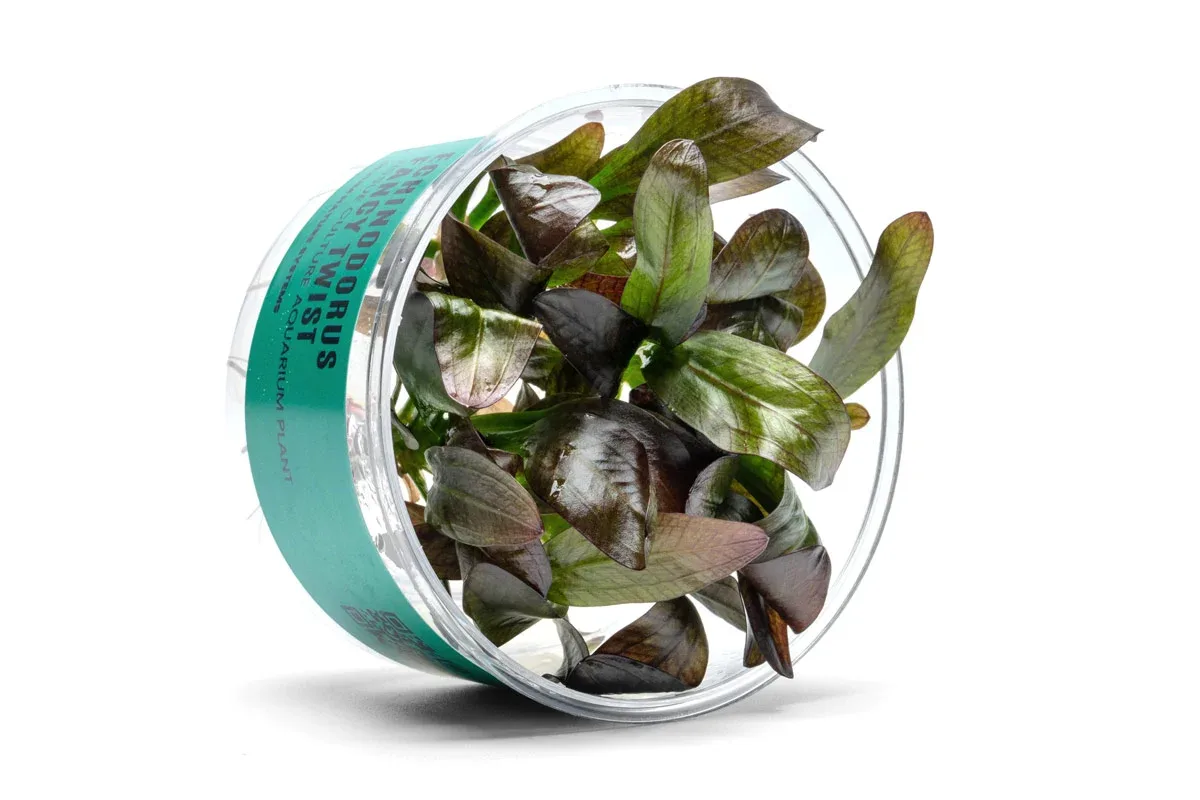
Living up to its playful name, Echinodorus ‘Fancy Twist’ delivers a colorful punch with foliage that unpredictably shifts from bright lime green to deep, blood-red hues across the rosette. As new leaves unfurl near the center of the plant, they display intense red and warm bronze tones before maturing into a rich green base, giving the plant a multi-toned, twisted color contrast. Reaching a substantial scale suitable for midground centerpieces or prominent background zones, it brings dramatic structural presence and vibrant color to planted displays.
Tissue culture cups ensure your aquascape gets a super clean starting point. Lab-grown and fully sterile, it arrives without pests, snails, duckweed, or any unwanted algae. It’s the go-to option for anyone who wants peace of mind when adding fresh greenery to a carefully maintained setup.
Key Features & Notes
Dynamic foliage shifts dramatically from bright green to deep blood red across new and maturing leaves.
Hardy rosette plant that delivers bold color contrast and lush coverage without demanding delicate high-tech care.
Care & Planting Instructions
Prep the plant by carefully removing the plantlets from the cup and rinsing away all sterile nutrient gel under lukewarm, dechlorinated water before mounting.
Plant the roots deeply into your aquarium soil, keeping the central crown resting just above the substrate line to prevent rot.
All Echinodorus are heavy root feeders that rely on rich substrate nutrition; placing root tabs near the base supports steady, healthy leaf development.
Provide moderate to high lighting; while CO2 injection isn’t strictly required, good lighting will enhance its reddish-brown colors. See our guide to growing red aquarium plants.
Maintain stable water parameters to prevent leaf shedding during the initial transition period.
Sword plants propagate through side shoots off of their leaves, which can be trimmed and replanted into the substrate. To control the size of your sword plant, you can remove the side shoots and older leaves.
Quick Facts
Listed information should be treated as general guidelines only. Team Buce Plant encourages you to do thorough research to ensure healthy growth!
Attribute
Specification
Scientific Name
Echinodorus ‘Fancy Twist’
Common Name(s)
Fancy Twist Sword, Echinodorus Fancy Twist
Family
Alismataceae
Plant Type / Taxonomy
Rosette plant / Cultivar
Care Difficulty
Easy
Light Requirement
Low to Moderate (Moderate to High for best red)
CO2 Requirement
Not required (Recommended)
Placement / Usage
Midground Centerpiece / Background Accent
Height / Size
8–16+ inches
Growth Rate
Slow to Moderate
Water Parameters
pH 6.0–7.5
Propagation Method
Separate new plantlets from the root crown or adventitious shoots
Origin
Cultivated cultivar (Species origin: South America)
Frequently Asked Questions
1. What makes UNS Tissue Culture Echinodorus Fancy Twist a great choice for new setups?
UNS Tissue Culture plants are grown in sterile, lab-controlled in vitro cups. This ensures that no pest snails, duckweed, algae spores, or harmful pesticides are introduced into your planted tank.
2. How do I maintain and enhance the blood-red leaf color on Echinodorus ‘Fancy Twist’?
Provide moderate-to-high lighting directly over the plant and place nutrient-rich root tabs near the root base. Higher light levels and consistent iron supplementation encourage newly unfurling center leaves to develop intense blood-red tones rather than remaining green.
3. How do I prep and plant tissue culture sword cup portions properly?
Gently remove the plant mass from the cup and rinse away the clear gel under room-temperature water. Using your fingers, separate the cluster into small individual plantlets and plant their roots deeply into the soil with pinsettes, making sure the leaf crown remains just above the substrate level.