
Description
Plant Profile
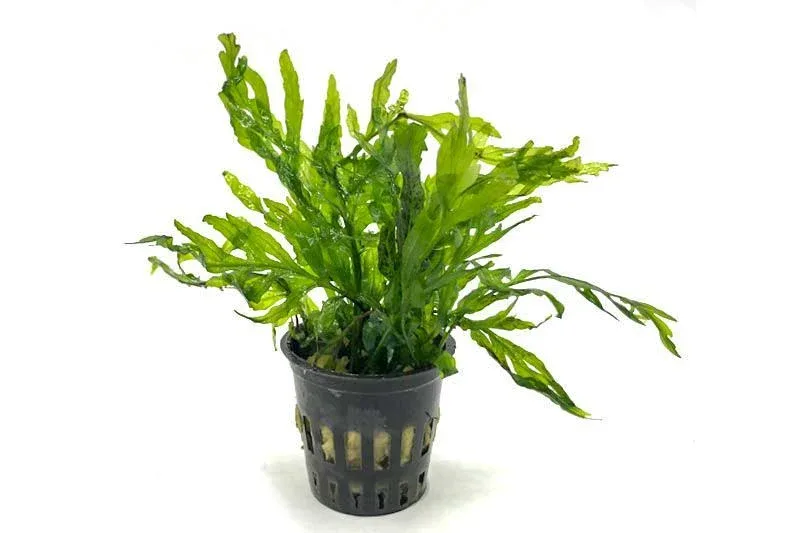
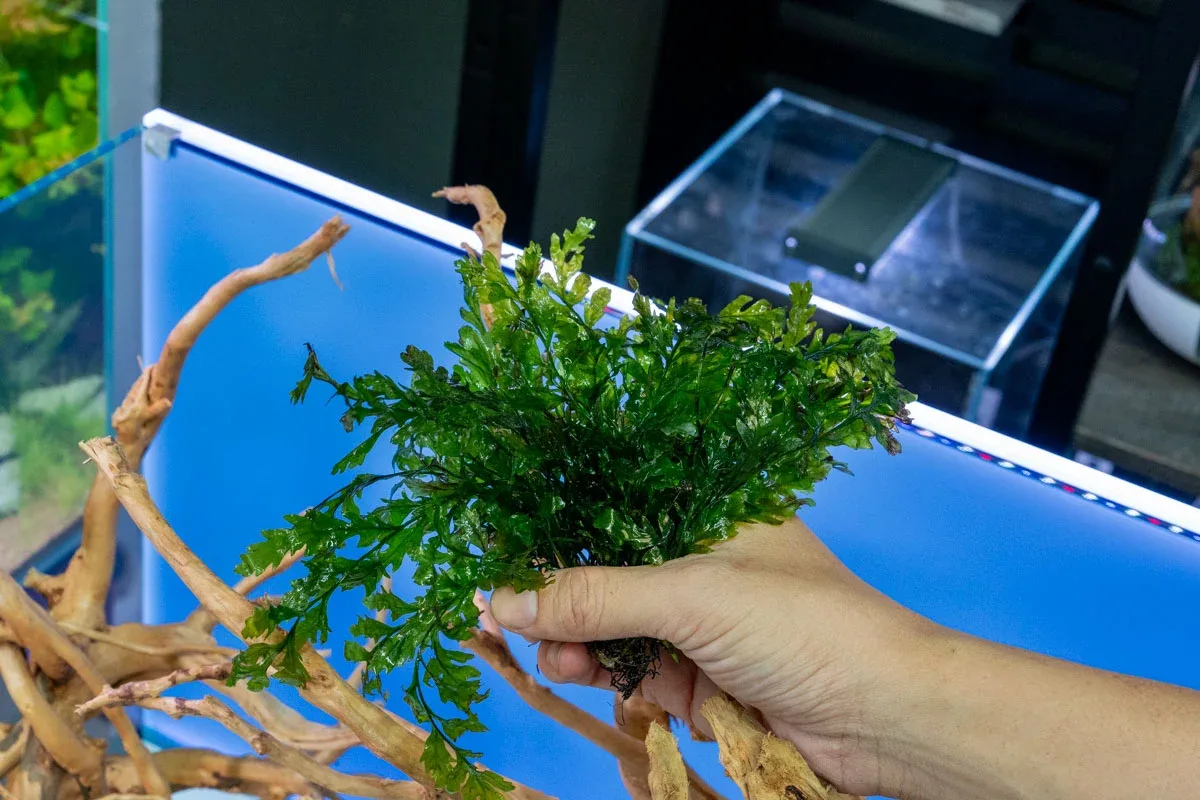
If standard Java Ferns feel a bit too vanilla for your low-light aquascape, African Water Fern (Bolbitis heudelotii) is here to fix that. Hailing from the fast-flowing, dramatic rivers of West Africa, this epiphyte rocks semi-translucent, deeply lobed emerald fronds that look less like a standard aquarium plant and more like delicate aquatic stained glass. Reaching a graceful 4 to 8 inches in height, its airy, lacy foliage provides top-tier visual contrast against dark, moody driftwood or rugged stone setups.
Key Features & Notes
Tough, fibrous foliage easily withstands curious nipping from herbivorous fish like cichlids, goldfish, and large snails.
Translucent, lacy emerald fronds bring an elegant, three-dimensional texture to midground and background hardscape arrangements.
This plant can be grown emersed or submerged.
Exceptional hardiness lets it thrive in non-CO2 tanks and low-light environments.
Care & Planting Instructions
Prep the plant by removing it from the pot and clearing all rockwool from the roots.
African Water Fern is an epiphytic fern that should be attached to rocks or driftwood with aquarium-safe glue or thread; never bury the horizontal rhizome in substrate, as it will rot and melt.
Position this plant in areas with moderate to high water circulation, as Bolbitis is a rheophytic species that thrives when water currents pass through its fronds.
Avoid making drastic changes to your water parameters or lighting because unstable conditions are the primary cause of leaf melt in new specimens.
While this plant is hardy and low-maintenance in standard setups, gentle water movement and regular liquid fertilizing will yield much faster growth and broader fronds.
Master long-term care and troubleshoot common leaf issues by checking out our Java Fern Care Guide.
Final size and foliage pattern depend entirely on your specific aquarium conditions; please note that photos are a representation, and individual plants may vary.
Quick Facts
Listed information should be treated as general guidelines only. Team Buce Plant encourages you to do thorough research to ensure healthy growth!
Attribute
Specification
Scientific Name
Bolbitis heudelotii
Common Name(s)
African Water Fern, Bolbitis Fern
Family
Dryopteridaceae
Plant Type
Epiphyte (Rhizome Fern)
Care Difficulty
Beginner / Easy (Low-Tech Compatible)
Light Requirement
Low to Medium
CO2 Requirement
Not Required (Beneficial)
Placement / Usage
Midground, Background, High-Flow Hardscape Accent
Height / Size
4″–8″ (10–20 cm)
Growth Rate
Slow
Water Parameters
pH 6.0–7.5 | Temperature 68°F–82°F (20°C–28°C)
Propagation Method
Rhizome Division
Origin
West Africa
Frequently Asked Questions
1. What makes African Water Fern (Bolbitis heudelotii) different from Java Fern?
While both are hardy epiphytes attached to hardscape, African Water Fern belongs to the Dryopteridaceae family and features semi-translucent, deeply lobed pinnate leaves that look like forest ferns. Standard Java Ferns belong to Polypodiaceae and typically produce solid, smooth, or ruffled undivided blades.
2. Why does Bolbitis heudelotii prefer higher water flow in the aquarium?
In nature, African Water Fern grows attached to submerged boulders in fast-moving African tropical rivers and waterfalls. Higher water movement delivers constant dissolved oxygen and nutrients to its foliage while preventing algae or particulate matter from settling on its delicate fronds.
3. Can I plant African Water Fern into substrate?
No. Bolbitis heudelotii is a strict epiphyte that absorbs nutrients directly from the water column through its foliage and fine root network. If you bury its horizontal rhizome beneath aquarium soil, sand, or gravel, the stem will suffocate, rot, and die. Always attach it to rocks or driftwood using aquarium-safe glue or thread.