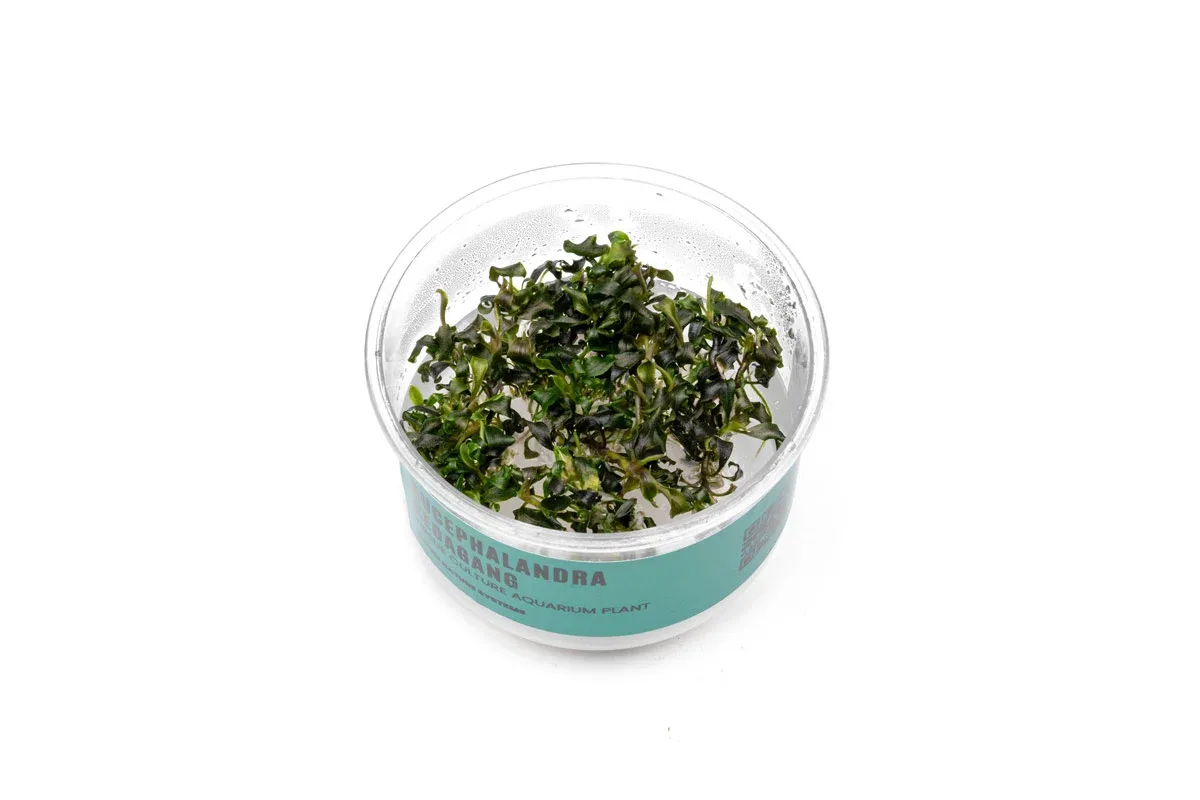

Description
Plant Profile
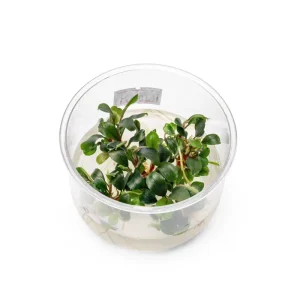
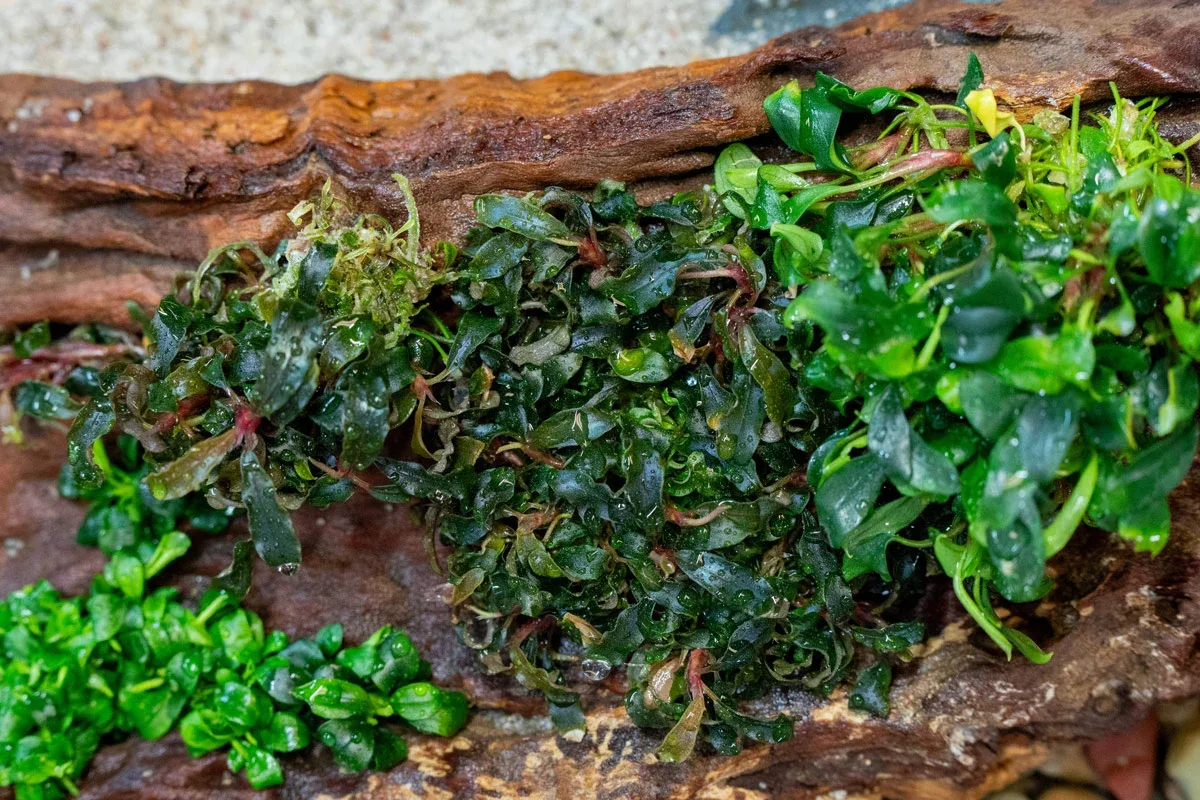
Renowned for its dramatic coloration, Buce ‘Kedagang’ features long, narrow, dark green leaves that display brilliant blue-purple metallic shifts as it adapts to underwater life. Growing to a moderate height of 2 to 4 inches, its slender foliage makes it an eye-catching midground focal point or an intricate accent wedged along driftwood branches and hardscape crevices. Like all Bornean epiphytes, it thrives submerged or emersed as long as its rhizome remains unburied, making it a hardy, beginner-friendly choice for adding lasting color and visual depth to low-light planted tanks.
Tissue culture cups ensure your aquascape gets a super clean starting point. Lab-grown and fully sterile, it arrives without pests, snails, duckweed, or any unwanted algae. It’s the go-to option for anyone who wants peace of mind when adding fresh greenery to a carefully maintained setup.
Key Features & Notes
Under stable conditions and quality LED lighting, the foliage develops a sought-after blue iridescence that adds a jewel-like quality to your tank.
This is one of the most durable species in the hobby and thrives in shaded areas. It is an ideal choice for planted tanks where other plants might struggle.
Care & Planting Instructions
Prep the plant by carefully removing the plantlets from the cup and rinsing away all sterile nutrient gel under lukewarm, dechlorinated water before mounting.
Bucephalandra is an epiphytic plant that should be attached to rocks or driftwood using aquarium-safe glue or thread; never bury the horizontal rhizome in substrate, as this will cause the plant to rot and melt.
Avoid making drastic changes to your water parameters or lighting because unstable conditions are the primary cause of leaf melt in new specimens.
While this plant is hardy and low-maintenance in standard low-light aquarium plant setups, CO2 injection and regular liquid fertilizing will yield much faster growth and a smoother tissue culture transition.
Final size and coloration depend entirely on your specific aquarium conditions; please note that photos are a representation, and individual plants may vary.
Quick Facts
Listed information should be treated as general guidelines only. Team Buce Plant encourages you to do thorough research to ensure healthy growth!
Attribute
Specification
Scientific Name
Bucephalandra sp. ‘Kedagang’
Common Name(s)
Buce Kedagang UNS Tissue Culture, Kedagang TC
Family
Araceae
Plant Type
Epiphyte (Tissue Culture)
Care Difficulty
Beginner / Easy (Low-Tech Compatible)
Light Requirement
Low to Medium
CO2 Requirement
Recommended for TC transition (Accelerates growth)
Placement / Usage
Foreground Detail, Midground Focal Point, Hardscape Crevices
Height / Size
2″–4″ (5.0–10.0 cm)
Growth Rate
Slow
Water Parameters
pH 6.0–8.0 | Temperature 68°F–80°F (20°C–26°C)
Propagation Method
Rhizome Division (Separate with sharp shears)
Origin
Borneo (Endemic / Lab Cultivated)
Frequently Asked Questions
1. How do I prepare tissue culture Bucephalandra for planting?
Gently remove the plant from its plastic cup, rinse off all the nutrient gel under lukewarm water, and separate the plant into smaller clumps before attaching them to driftwood or rock using aquarium-safe glue or thread.
2. Why is my tissue culture Bucephalandra melting after planting?
Tissue culture plants undergo an acclimation phase when transitioning to underwater conditions. Maintain stable water parameters, good circulation, and moderate light; as long as the rhizome stays firm, new submerged leaves will emerge.
3. Can tissue culture Bucephalandra be planted in substrate?
Yes, you can push the roots into substrate or gravel to help anchor the plantlet. However, you must keep the central horizontal rhizome completely exposed above the substrate line, as burying the rhizome starves it of circulation and causes rot.